Does Insurance Cover Pool Cage Damage in Florida?
 CALL NOW
The short answer: structural frame damage is typically covered. Screen mesh damage typically isn't. But Florida insurance language for pool enclosures has shifted significantly since 2017, and what your specific policy pays depends on the endorsements attached to it. This guide explains what most carriers cover, what they exclude, the hurricane deductible reality, and how to document a claim to maximize your payout.
What Florida Carriers Typically Cover
Most Florida homeowner policies treat the pool cage as a "screened enclosure" structure attached to the dwelling. Under standard policy language, this means:
Covered: Structural damage to the aluminum frame from a covered peril (wind, named windstorm, falling tree limb, vehicle impact, certain types of vandalism). This includes:
- Bent or collapsed uprights and beams
- Failed footer connections and anchor damage
- Sectional collapse (corners, gables, roof panels)
- Total cage loss
- Frame distortion sufficient to require structural repair
Typically excluded:
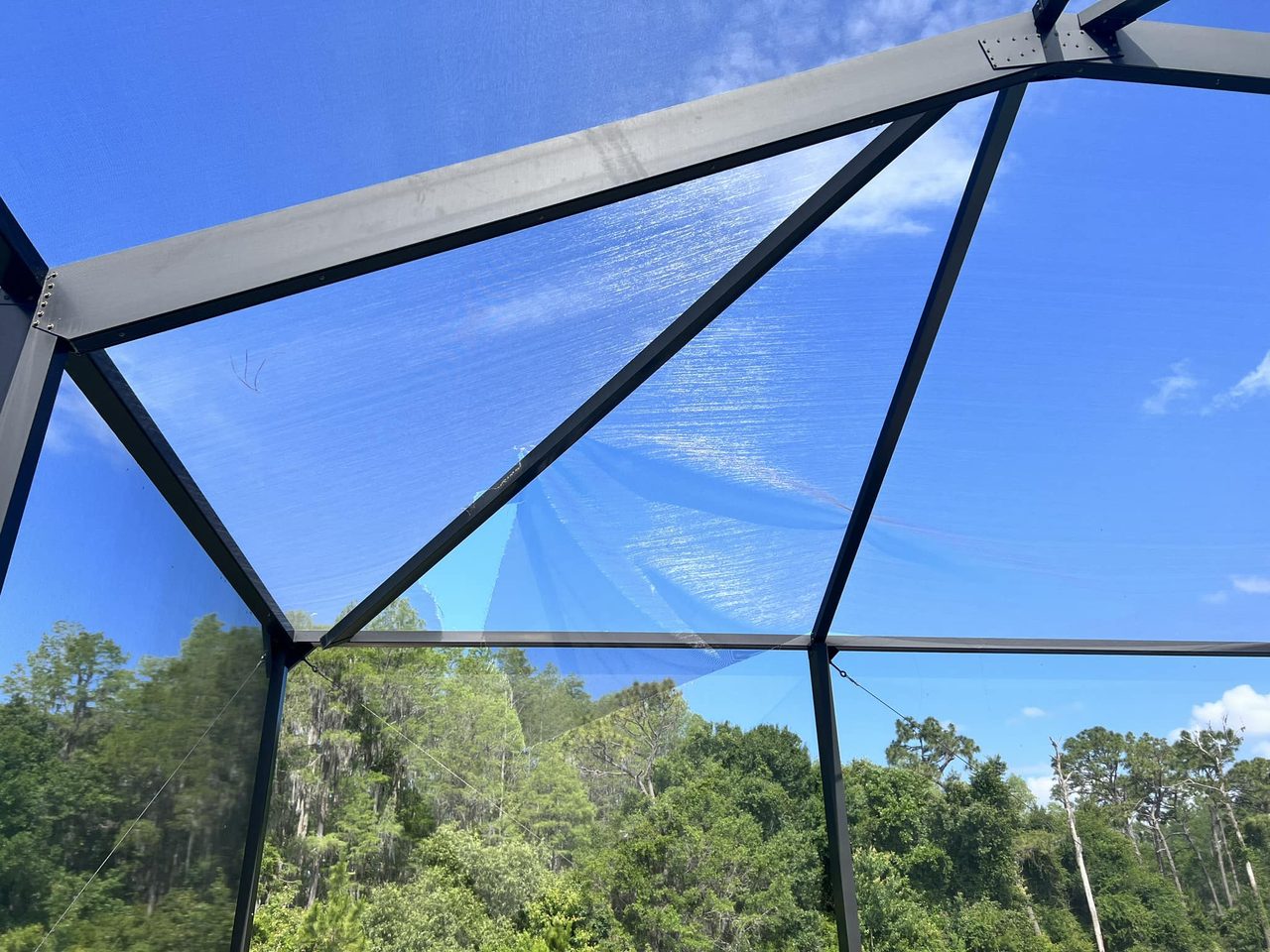
- Screen mesh damage (panels torn but frame intact) — increasingly excluded since 2017 across major Florida carriers
- Cosmetic damage (faded paint, surface corrosion, minor dings)
- Gradual wear and tear (aluminum fatigue over decades, slow corrosion)
- Damage from pets, normal use, or improper prior repairs
- Damage from non-covered perils (flood, earth movement unless specifically endorsed)
The Hurricane Deductible Reality
This is the part most homeowners don't fully understand until they file a claim. Florida policies typically have a separate hurricane deductible that applies before any payout from a named windstorm event. This deductible is a percentage of your dwelling coverage, not a flat dollar amount.
Typical hurricane deductible structure:
- 2% of dwelling coverage — common on older policies
- 5% of dwelling coverage — increasingly common on new policies and renewals after 2022
- 10% of dwelling coverage — applied in some high-risk coastal zones
What this means in dollars: on a $400,000 dwelling coverage policy with a 5% hurricane deductible, the first $20,000 of any hurricane-related damage comes out of your pocket. If your pool cage damage is $15,000 from Helene, your insurance pays $0 — the entire claim is under deductible.
This is why post-hurricane pool cage damage often pencils as "not worth claiming" for partial damage but absolutely worth claiming for total loss or major structural damage.
What Carriers Look For in a Claim
When an adjuster reviews a pool cage claim, they're evaluating four things:
1. Cause of loss. Was the damage from a covered peril (named windstorm, falling object) or a non-covered cause (gradual wear, neglect, prior unrepaired damage)? Photographs and the structural assessment matter here.
2. Extent of structural damage vs. cosmetic. The adjuster will try to characterize the damage in terms of what's covered. A licensed contractor's assessment that specifies "structural frame damage to uprights 3, 4, and 7" carries more weight than a generic "pool cage damaged" entry.
3. Repair cost vs. policy limits. Some policies cap pool enclosure coverage at a percentage of dwelling coverage (often 10%–20%). For full replacement claims on large enclosures, this cap can constrain payout.
4. Whether replacement vs. repair is appropriate. Carriers will sometimes try to characterize damage as repairable when full replacement is the actual right answer. Push back with documentation.
How to Document a Pool Cage Insurance Claim
The quality of your documentation is the biggest factor in whether the claim gets fully paid. Step-by-step:
1. Photograph before any cleanup. Wide shots from all four sides. Then close-ups of every damage point. Then photos of the footer connection at every visible anchor point. Then interior shots showing screen damage even if screen isn't covered (this matters for the contractor's scope).
2. Take video walking the perimeter. A 2-3 minute walkthrough video showing the full cage from multiple angles gives the adjuster context the photos can't.
3. Document the cause of loss. If a tree limb fell, photograph the limb. If wind damage, document the storm date and any obvious wind-direction evidence (which corner took the worst hit).
4. Get a written structural assessment from a licensed aluminum contractor. Not a rescreener. The assessment should specify damage type per section, repair scope, materials needed, and pricing. This is the document the adjuster will compare against their own findings.
5. Keep receipts for mitigation. Tarp, temporary covering, debris removal — anything you spent to prevent further damage is typically reimbursable.
6. File within your carrier's deadline. Florida typically allows 1 year from the loss date for hurricane claims, but check your specific policy. Some carriers have shorter windows.
Why Rescreener Assessments Don't Carry Weight on Claims
This catches a lot of homeowners off guard. Insurance adjusters give different weight to assessments depending on who wrote them. A rescreening company's quote is a screen panel quote — it doesn't address frame condition, doesn't specify structural damage classification, and doesn't have the credibility to drive a structural payout.
For any claim involving frame damage, total loss, or any structural finding, you need an assessment from a licensed aluminum contractor with permit experience. That's the documentation format adjusters expect for structural claims. See our hurricane damage page for the full claim documentation walkthrough.
What If The Claim Gets Underpaid?
Underpayment is common — adjusters often initially settle at repair scope when replacement is appropriate, or characterize structural damage as cosmetic. Options:
- Reopen the claim with the licensed contractor's structural assessment
- Request a re-inspection with the contractor present to walk the adjuster through findings
- File a public adjuster claim — public adjusters work for the homeowner and negotiate against the insurance company. Typically charge 10–20% of additional payout secured
- File a complaint with the Florida Department of Financial Services if the underpayment is severe and the carrier won't engage
For most Tampa Bay homeowners, a good written structural assessment combined with a re-inspection request gets the payout to the right level without needing a public adjuster.
Get a Claim-Ready Assessment
If you have a pool cage damage claim and need a structural assessment that'll actually move the needle with your adjuster, we write claim-format assessments specifically for Florida pool enclosure claims. Call (813) 485-6204 or fill out the form.
CALL NOW