Pool Enclosure Structural Damage: A Tampa Homeowner's Guide
 CALL NOW
If you've noticed something off about your pool cage but you're not sure whether it's a real problem, this guide is for you. It covers the 5 warning signs of structural damage in a pool enclosure, the difference between cosmetic screen issues and frame-level failures, and when to call a licensed aluminum contractor for an assessment. Written for Tampa Bay homeowners across Hillsborough, Pinellas, and Pasco County.
The 5 Warning Signs of Structural Pool Cage Damage
Most pool cage structural problems show up in one of five ways. Some are obvious; some are easy to miss until they get worse.
1. Visible Bowing or Sagging in the Frame
Stand under your cage and look at the horizontal beams running along the top. They should be straight. If you see any beam that visibly sags toward the middle, dips downward at one end, or bows outward, the structure is compromised. Bowing typically starts in the back-wall beam (facing the pool) and progresses with seasonal storm cycles. Once a beam bows, it doesn't recover on its own — it needs structural repair before the bow gets worse and starts pulling adjacent sections out of alignment.
2. Connection Point Separation
Pool cage frames are joined at hundreds of connection points using self-tapping screws and aluminum brackets. Over time — especially after a storm event — these connections can loosen, the screws can back out, or the brackets can crack. Look for visible gaps at corners, separated joints where two pieces of aluminum meet, or screws sticking out further than they should. Connection failures are the most common cause of progressive structural collapse: once one connector fails, the load shifts and stresses the next one.
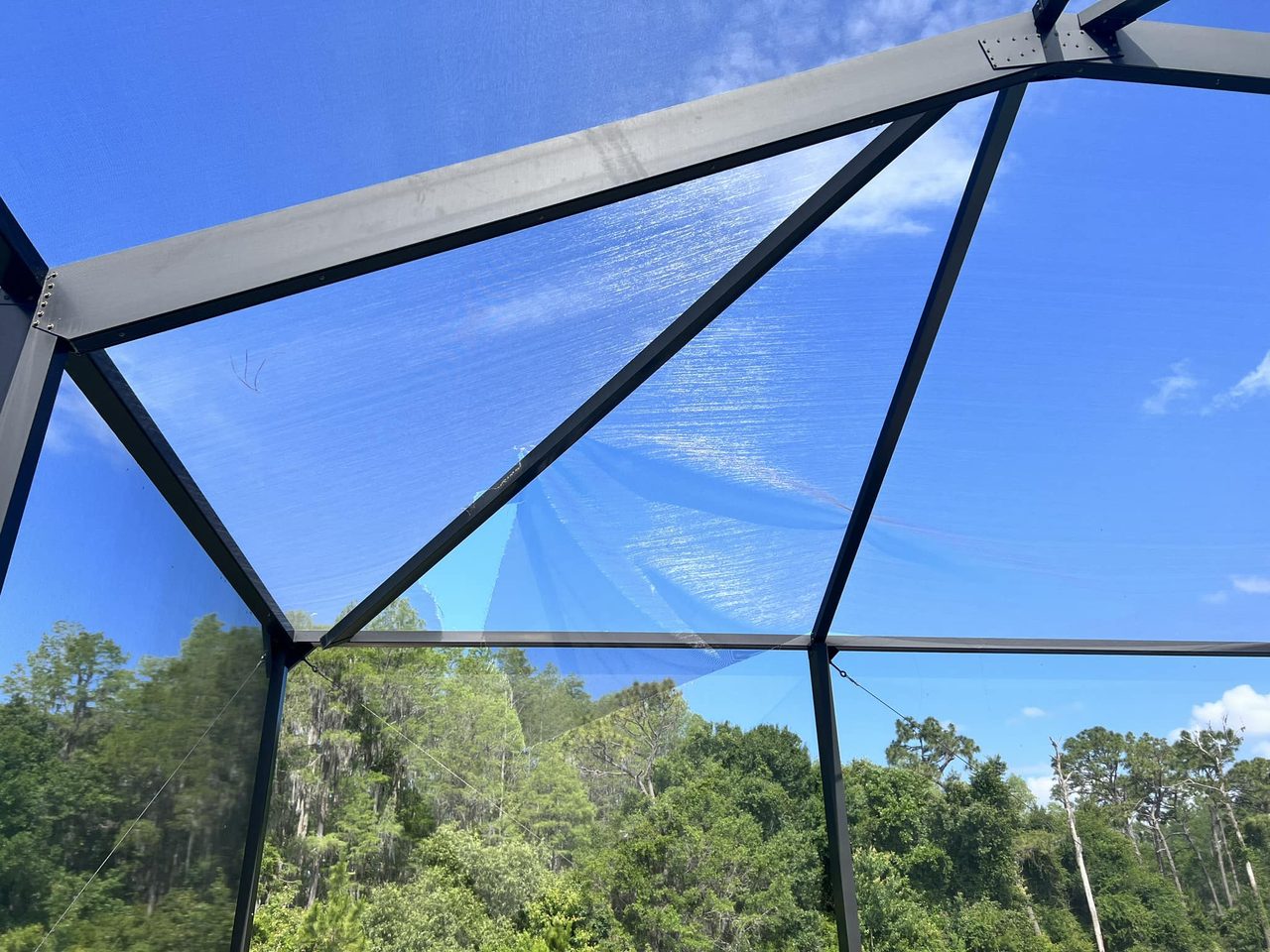
3. Screen Tension Loss From Frame Distortion
Screen panels should be taut. If your screens look loose, baggy, or wrinkled, the most common cause isn't the screen itself — it's that the frame holding the screen has shifted or flexed. The frame is what tensions the screen. When the frame moves, the screen goes slack. A rescreener will replace the panel and charge you $50–$80, but if the underlying frame distortion isn't fixed, the new screen will go slack within 6–12 months.
4. Visible Rust or Corrosion at Welds
Aluminum doesn't rust, but the steel fasteners and weld points in a pool cage can — especially in coastal Pinellas County properties exposed to salt air. Look for orange or brown staining at the corners, around screws, or at any weld point. Surface staining alone is cosmetic. But if you see actively flaking corrosion or visible pitting in the aluminum itself, the metal has lost structural integrity and that section needs replacement, not just cleaning.
5. Post-Storm Lean or Footer Movement
After any major storm event, walk the perimeter of your cage and look at the base. The aluminum frame should sit flush against the concrete deck at every footer point. If you see daylight between the aluminum and the deck, screws pulled out of the concrete, or the cage visibly leaning relative to the house, you have footer separation. This is a serious structural finding and means the cage's anchoring failed — it needs immediate assessment before another storm event finishes the job.
Cosmetic vs. Structural — How to Tell the Difference
Not every problem with a pool cage is structural. Here's how our team draws the line:
Cosmetic issues — torn screen panels, faded paint, surface dirt or mildew, missing fastener caps, slightly loose screen tension. These can be addressed with rescreening, cleaning, and minor touch-up work. Cost is typically under $1,000.
Structural issues — anything affecting the aluminum frame, the connections holding it together, or the anchoring to the deck. This includes everything in the 5 warning signs above. Structural repair requires a licensed aluminum contractor, a county permit, and aluminum-grade fabrication. Cost ranges from $1,500 to $30,000 depending on scope.
The mistake we see most often: homeowners call a rescreening company for a structural issue, get a $400 rescreen, and find the same problem back within a year — sometimes worse. See our FAQ on how to tell if your pool cage needs structural repair for more.
What an Assessment Looks Like
If any of the 5 signs above sound familiar, the next step is a free structural assessment. Here's what we do on a site visit:
- Inspect every upright and beam for bowing, distortion, or fatigue
- Check every visible connection point — screws, brackets, welds — for failure or separation
- Walk the full footer perimeter and check anchoring to the deck
- Test screen tension at multiple panels to identify frame movement
- Document all findings with photos and a written report
- Provide a repair-or-replace recommendation with itemized pricing
What Structural Repair Costs
Once you've confirmed the issue is structural, costs depend on scope:
- Single-section frame repair: $300 – $800
- Multi-section structural work: $1,500 – $5,000
- Full cage replacement: $12,000 – $30,000
For a detailed breakdown by city and job type, see our pool cage repair cost guide for Tampa Bay.
Get a Free Structural Assessment
If anything in this guide describes your pool cage, the right next step is an assessment — not a rescreen. Call (813) 485-6204 or fill out the form, and we'll come out, look at the structure, and give you an honest answer.
CALL NOW